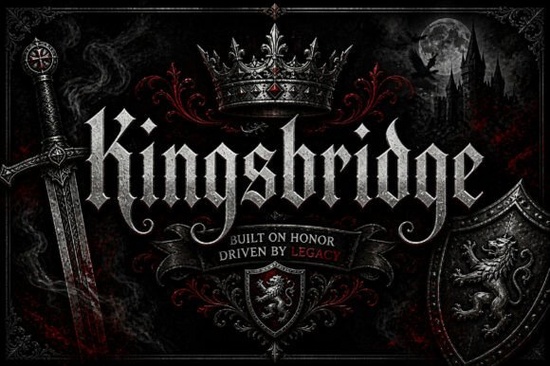
When you need a display typeface that immediately signals authority and vintage craftsmanship, a well-crafted gothic letterform is often the best starting point. The Kingsbridge Font gives creators exactly that kind of visual weight. It combines sharp blackletter structures with modern spacing and readable curves, so you get a historic feel without sacrificing practical usability. Whether you are designing packaging for a new coffee blend, drafting album artwork, or updating a local brewery label, this typeface handles heavy visual hierarchy with ease.
Why do creators still rely on traditional blackletter styles today?
Many people assume medieval-inspired typography feels too heavy for modern screens or minimalist layouts. That assumption changes when the letterforms are balanced correctly. This font keeps the dramatic contrast of historic manuscript writing but trims the unnecessary flourishes that make older digital versions hard to read. The result is a clean, structured display type that holds up well in both large posters and smaller headline blocks.
If you have been exploring how gothic old english font blackletter fonts fit into current design workflows, you will notice a clear shift toward lighter weight and improved tracking. Kingsbridge follows that exact path. The swash details are placed at terminal ends rather than inside the main body of each character, which prevents visual clutter when you scale the text down for web banners or product mockups.
Which project types benefit most from this kind of display type?
Small business owners and print-on-demand sellers need typefaces that photograph well under studio lighting and print clearly on fabric or paper. The strong vertical stems and consistent x-height in this font make it a reliable choice for merchandise. You can drop it straight onto tote bags, enamel pins, or vintage-style event posters without worrying about jagged edges or blurred serifs on a large format press.
Tattoo artists and fashion label designers also look for this exact balance. A display font with sharp angles and subtle curve accents reads as premium when placed on garment tags or packaging inserts. If you are building a brand identity from scratch, you can use it as your primary headline type and pair it with a clean sans serif for body text. For more layout ideas, you can review these composition examples to see how different spacing adjustments change the overall tone.
How should you set the type for maximum clarity?
Working with any high-contrast blackletter display type requires careful attention to size and spacing. Start by setting your main headline at a minimum of thirty-two points for print, or one point two rem for digital interfaces. If you go smaller, the intricate terminals will merge together and lose their sharp definition.
Tracking matters just as much as point size. Add a slight positive letter-spacing to give each character room to breathe. You do not want the sharp gothic angles touching each other, especially when printed on dark backgrounds where ink spread is common. Test your layout in grayscale first to check the contrast balance before applying any color grading or texture overlays.
- Pair with a neutral sans serif for paragraph text to keep the layout readable.
- Use uppercase sparingly since full caps in blackletter styles often look too dense for long strings.
- Keep line height at one point three to one point five to prevent overlapping ascenders and descenders.
What is the best way to test this typeface before committing?
Always preview your design on actual hardware before finalizing files for print or digital distribution. Screens show crisp edges, but paper stock and fabric weaves absorb ink differently. Export a sample PDF and view it on a phone, tablet, and desktop to confirm that the dramatic contrast remains intact across breakpoints. If you run into issues with specific characters colliding, adjust the kerning manually rather than relying on auto-tracking settings.
Before you lock in your final files, run through this quick layout checklist:
- Print a test strip at one hundred percent scale to verify edge sharpness.
- Check readability on mobile screens by zooming in to normal reading distance.
- Swap the background to both light and dark modes to confirm contrast holds.
- Save a vector backup so you can adjust curves and weights without losing quality.
Start with a single headline, test it against your brand palette, and adjust the tracking until the letterspace feels balanced. Once you see how the characters hold up in real-world lighting, you will know exactly where to place the final export.
Download Now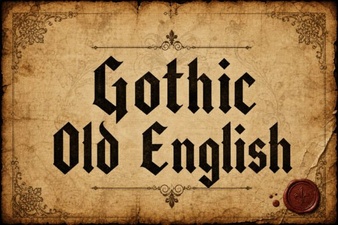 Gothic Old English Fonts for Modern Designs
 Explore the Coconut Bay Font for Creative Projects
 Super Sport Bundle Font: Designs That Move & Inspire
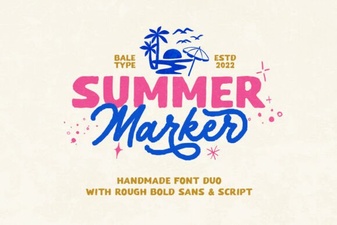 Summer Marker Font for Creative Projects & Designs
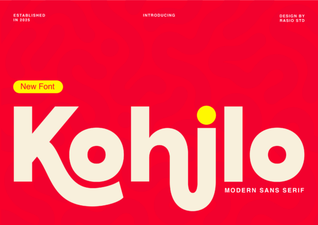 Design with Kohilo Font: a Modern Typography Resource
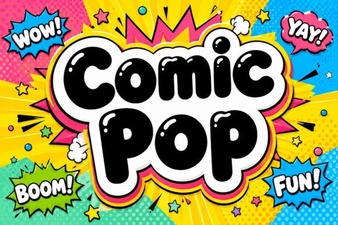 Fun Comic Fonts for Creative Projects